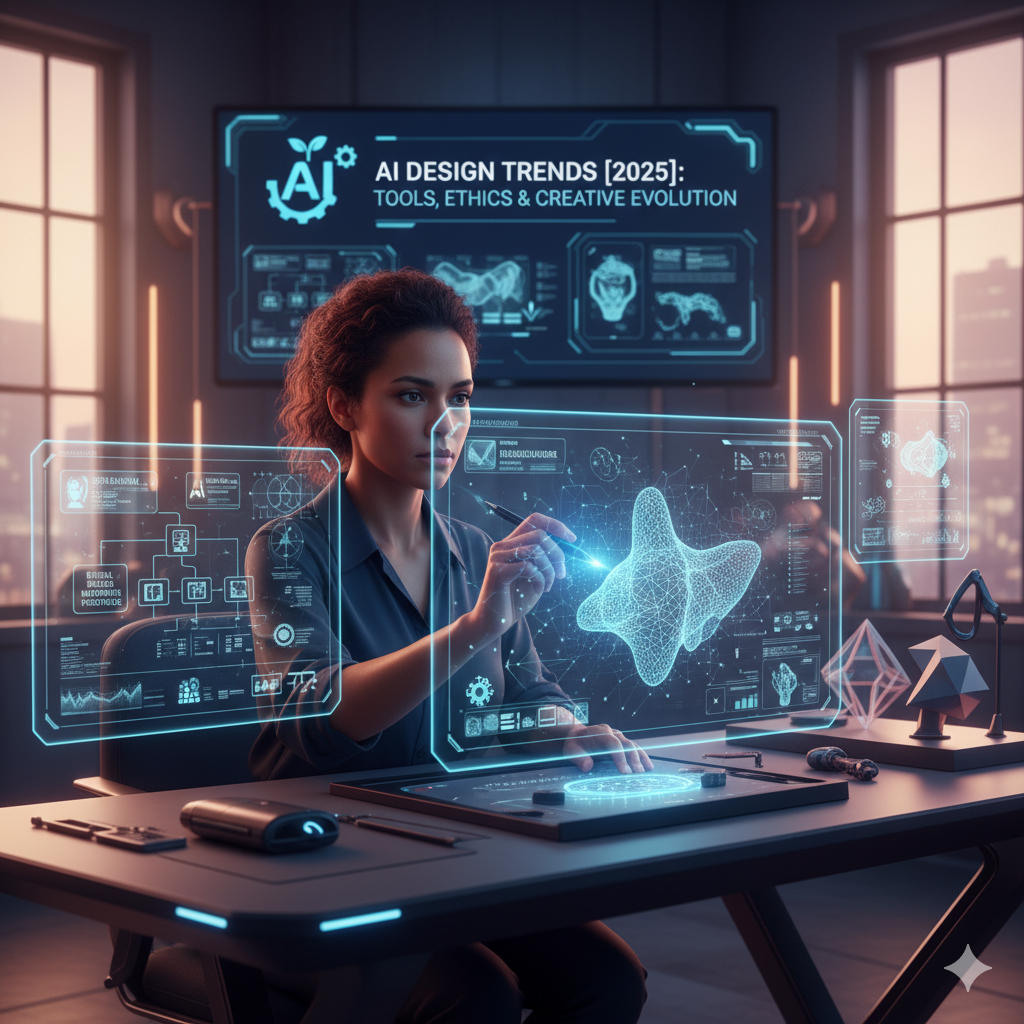
AI isn’t just another design tool — it’s reshaping how we create, collaborate, and think about originality. In 2025, the conversation around AI and design has moved beyond novelty. We’re now asking deeper questions: How do we use it well? Where does creativity fit? What’s ethical?
Let’s explore the biggest trends shaping AI-driven design this year — from emerging tools to the creative and cultural shifts they’re sparking.
🛠️ 1. AI as a Design Co-Pilot, Not a Replacement
More designers are embracing AI not to do the work for them, but to do it with them.
- Generate quick mockups or layout ideas
- Brainstorm visual concepts in seconds
- Automate repetitive tasks (think resizing, background removal, color matching)
Popular tools in 2025:
- Adobe Firefly
- Runway ML
- Figma AI
- Midjourney / DALL·E 3
- Krea (for real-time AI sketching and refinement)
Creative shift: AI is less about “cheating” and more about working faster and freer.
🧠 2. Prompt Craft = The New Design Skill
Writing prompts well is becoming just as valuable as knowing color theory or grid systems.
- Prompting is now considered part of the design brief
- Designers are learning how to “speak AI” to get precise results
- Some creatives even specialize in prompt design as a career
Trend watch: Expect more hybrid roles — “AI Art Director,” anyone?
⚖️ 3. Ethics Front and Center
As AI-generated visuals flood the market, ethical design is getting real.
Key questions designers are wrestling with:
- Is this visual truly mine if AI made it?
- Should clients know if I used AI?
- What about training data that pulls from other artists’ work?
Emerging norms:
- Labeling AI-generated content
- Mixing AI + original work (not fully relying on either)
- Using ethically trained tools with transparent data policies
🎨 4. A New Aesthetic Is Emerging
We’re starting to recognize an AI look: surreal lighting, dreamlike details, uncanny perfection.
Instead of fighting it, many designers are:
- Leaning into the surrealism for editorial, fashion, or concept work
- Blending AI imagery with hand-drawn textures or analog type
- Using AI for moodboarding, not final assets
Creative evolution: The best work often comes from a human–AI remix.
💥 5. The Rise of AI-First Design Studios
Entire studios and freelancers are now building workflows around AI.
- Quick turnaround visuals for startups and social
- High-volume content creation for branding, campaigns, and web
- AI-driven branding systems that evolve over time
Think: Fast, iterative, and endlessly remixable.
🚨 Bonus Trend: Design Education Is Shifting
Design schools and bootcamps are beginning to:
- Teach prompt writing
- Discuss AI ethics
- Include “co-creation” as part of studio practice
Why this matters: Tomorrow’s designers need both creative intuition and AI fluency.
🔮 Wrap-Up: Where We’re Headed
AI in design isn’t replacing humans — it’s expanding what humans can do. In 2025, the most exciting work is coming from those who blend tools, question processes, and embrace new ways of thinking visually.