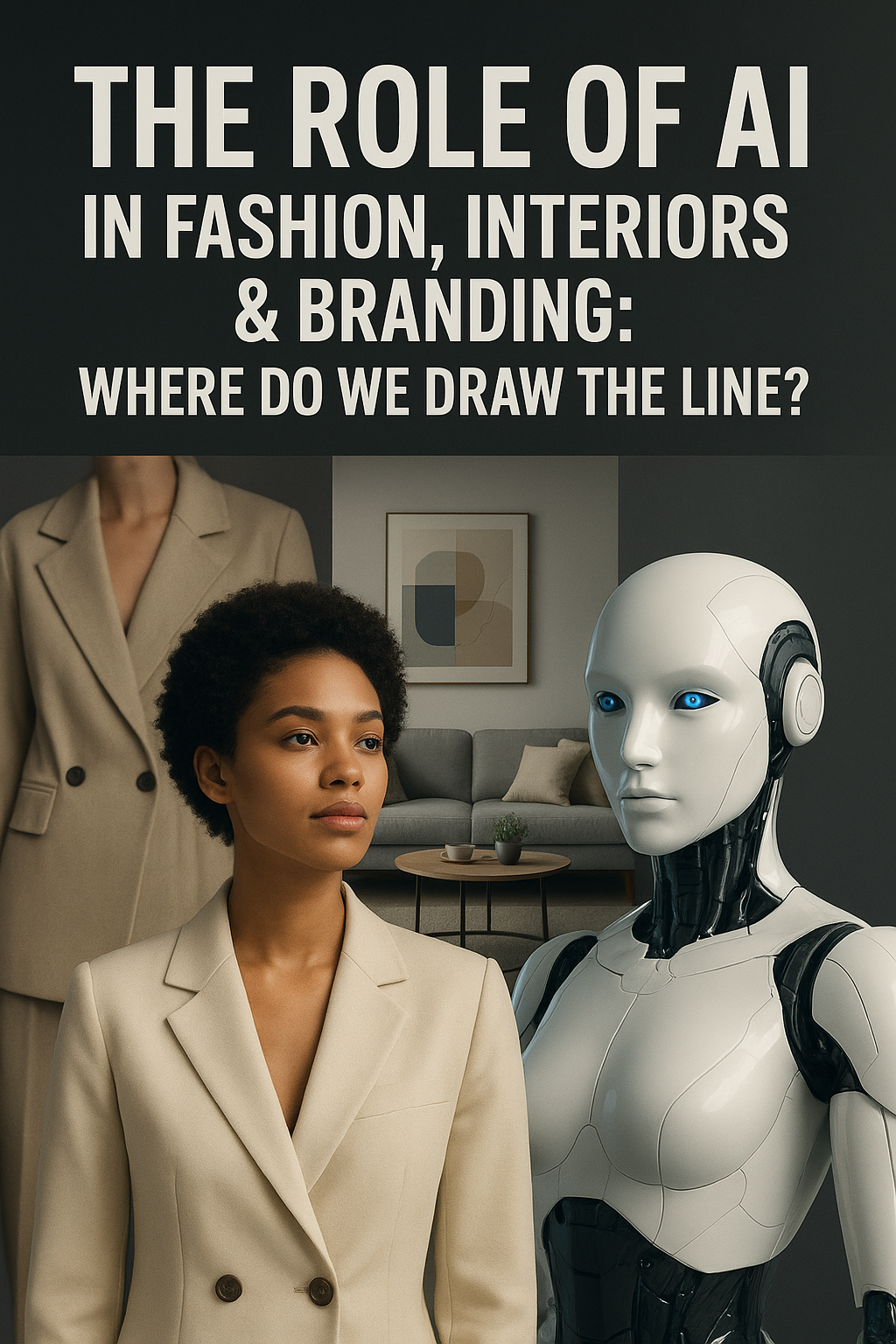
In 2026, AI isn’t just a backstage tool — it’s sitting front row in creative industries like fashion, interior design, and branding. It’s suggesting color palettes, generating moodboards, designing patterns, even writing taglines.
But as AI’s creative influence grows, so do the questions:
Where’s the boundary between inspiration and imitation? Originality and automation? Craft and code?
Let’s look at how AI is shaping these fields — and why designers everywhere are starting to ask: Where do we draw the line?
👗 In Fashion: AI Is Reimagining the Creative Cycle
From AI-generated fabric prints to algorithmic trend forecasts, fashion design is speeding up and shifting. Some designers now:
- Use AI to prototype collections or generate lookbooks
- Feed reference images into tools like Midjourney or DALL·E for style exploration
- Use machine learning to predict color, silhouette, or material trends
What’s the benefit?
More creative freedom, faster iteration, and access to inspiration that crosses cultures and centuries in seconds.
But here’s the catch:
If AI is trained on past collections, where’s the true innovation coming from?
Who owns the visual outcome — the designer, the AI, or the data it was trained on?
🛋️ In Interiors: AI Is Democratizing Design
Interior designers are experimenting with:
- AI room renderers like RoomGPT or Planner 5D
- Moodboards created in seconds
- Smart tools that suggest furniture layouts, color schemes, or decor themes
For DIY decorators and professionals alike, this feels like a revolution.
But the challenge?
“It makes everyone a designer — but not everyone understands design thinking.”
— Lucia, interior stylist
AI tools can suggest what “looks good,” but they don’t understand context, function, or emotion — the core of truly human interior spaces.
🔤 In Branding: AI Can Nail the Look — But Miss the Soul
AI is helping agencies and freelancers:
- Generate logos
- Build visual systems
- Write taglines and product descriptions
- Even name businesses with tools like Namelix or Looka
That’s amazing… until everything starts to feel the same.
When dozens of startups use the same tools, trained on similar data, brands risk becoming visually interchangeable — generic logos, safe color palettes, templated copy.
“You can’t build a cult brand with a commodity toolset.”
— Jared, brand strategist
AI can help you design faster — but differentiation still comes from human insight.
⚖️ Where Do We Draw the Line?
Here’s where many creatives are landing in 2026:
| What AI Should Do | What Humans Must Own |
| Speed up drafts & production | Creative direction & emotional storytelling |
| Suggest palettes, layouts, or compositions | Know when to break the rules |
| Automate repetitive tasks | Make strategic, human-centered decisions |
| Spark ideation with prompts or references | Filter ideas through taste, context, and meaning |
💬 Closing Thought: Creativity ≠ Output
AI excels at producing — but creativity isn’t just about speed or scale. It’s about intention, storytelling, and point of view.
If we rely on AI for all of it, we risk creating a world of visuals with no voice.So, where do you draw the line?