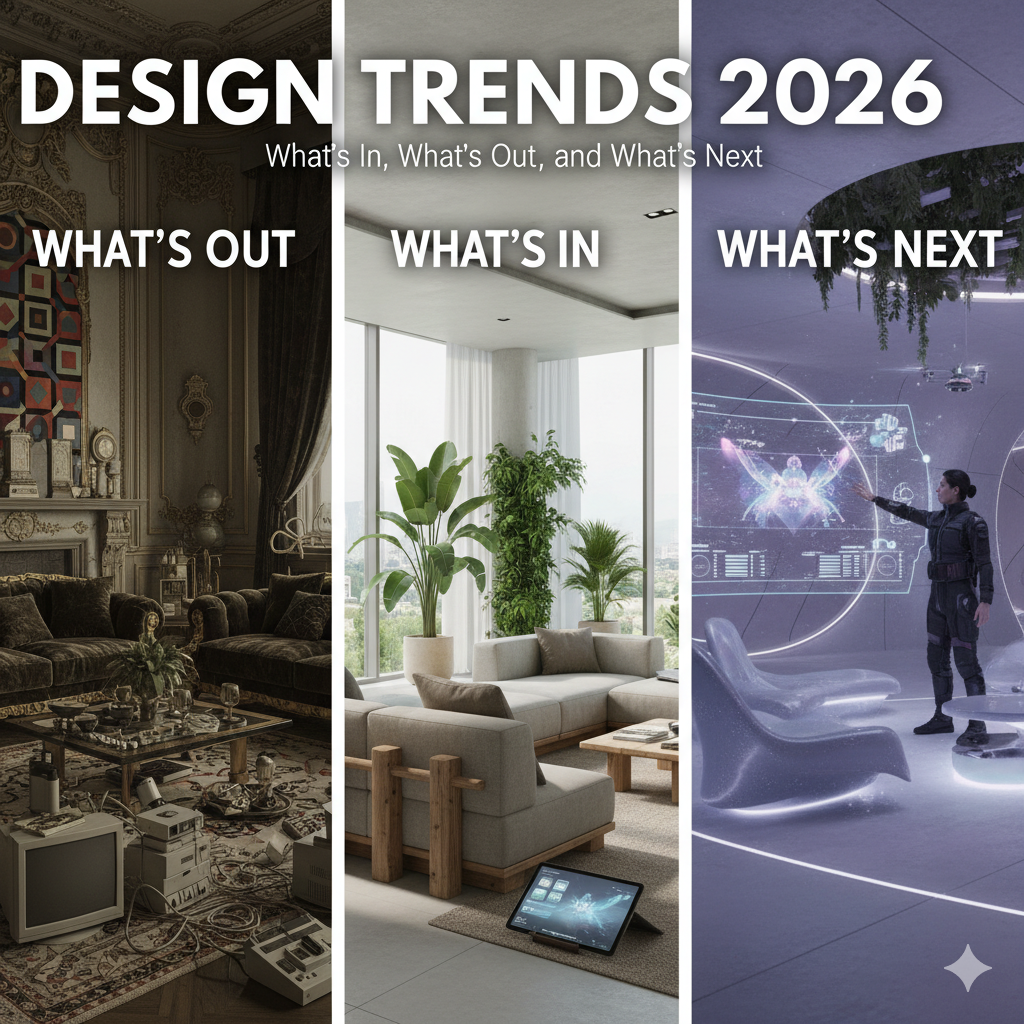
🎨 What’s In: A Celebration of Imperfection and Personality
The design world in 2025 is moving away from sterile, hyper-polished perfection and embracing a more tactile, human-centric approach. This is evident across various disciplines, from graphic design to interiors.
Graphic and Web Design
- Human-Made Imperfection: We’re seeing a backlash against the flawless, AI-generated imagery that has become so ubiquitous.1 Designs with etches, grains, smudges, and hand-drawn doodles are gaining traction, adding warmth and authenticity.2 This “anti-synthetic” aesthetic highlights the human touch and creates a sense of tangibility.3 ✍️
- Structured Scrapbook and Mixed Media: This trend brings the nostalgic feel of physical scrapbooking into the digital realm.4 It involves layering different media—photos, digital art, hand-drawn elements, and textures—to create dynamic, asymmetrical, and whimsical collages.5
- Bold Minimalism: Minimalism isn’t gone; it’s just getting bolder.6 This new iteration uses a stripped-back, simple layout with a few elements that have a heavy impact.7 Think bold typography, vibrant color palettes, and striking photography that grab attention without cluttering the space.8
- Mismatched & Bright: A playful and energetic trend reminiscent of ’90s aesthetics, this style uses contrasting, bright colors (like neon yellows and deep purples) and mismatched fonts of different widths and sizes.9 The layouts are often asymmetrical and irregular, creating a fun, quirky, and attention-grabbing look.
Interior Design
- Modern Rustic & Rewilding: This trend is all about bringing the outdoors in. It’s grounded in honest, natural materials like wood and stone, and incorporates earthy color palettes and organic, flowing shapes.10 It’s a re-connection to nature that feels both sophisticated and grounded.11 🌿
- Statement Maximalism: This isn’t the chaotic maximalism of the past. It’s about curated, intentional, and bold choices. It embraces expressive color, pattern-on-pattern, and layered details that feel collected over time rather than just cluttered.12
- Edwardian Elegance: A quiet return to comfort and craftsmanship, this trend features high ceilings, pale walls, botanical patterns, and classic molding.13 It’s a subtle grandeur that feels like a calm antidote to years of hard edges and bare walls.
- Fat Furniture: Comfort is a top priority, and furniture is reflecting that.14 Expect to see oversized, voluptuous sofas and chairs that are not just functional but also serve as sculptural elements in a room.15
❌ What’s Out: The End of Over-Polished Perfection
While these styles may not completely disappear, they are losing their dominance as designers seek more personality and depth.
- Hyper-Polished, Flat Design: The overly clean, two-dimensional aesthetic that has defined much of web and graphic design is being challenged. Designers are seeking out tactile, textured, and three-dimensional elements to create a more immersive experience.
- Cold, All-White Interiors: The all-white, stark minimalist look is being replaced by warmer neutrals, creamy tones, and bold, mood-setting colors.16 There’s a desire for spaces that feel cozy, personal, and lived-in.
- Static Branding: Fixed logos and rigid brand identities are becoming a thing of the past.17 Brands are moving towards dynamic branding ecosystems where logos and colors can shift and adapt in real-time based on context or user data.
🔮 What’s Next: The Rise of AI and Sensory Design
Looking beyond the current trends, the future of design is deeply intertwined with technology and a focus on how design makes us feel.
The AI Collaboration
AI is no longer just a tool for automation; it’s becoming a creative partner.18 Designers are using AI to generate ideas, create hyper-realistic visuals, and streamline their workflow. The focus is on using AI to amplify human creativity, not replace it.19 We’ll see more designs with AI-generated textures, compositions, and even entire visual narratives.20
Multi-Sensory Experiences
Design is moving beyond just the visual.21 The next frontier is synesthetic and multisensory design, where designers integrate sound, haptic feedback, and even scent into the user journey.22 Think of websites with sound-reactive animations, or wellness apps that use haptic feedback to create a calming effect.
Kinetic Typography
Typography will become even more dynamic and expressive. Kinetic typography, which breathes life into words through motion, will become a central element of branding and web design, particularly on social media and mobile interfaces.23
In essence, the design trends of today and tomorrow are a reflection of a society craving authenticity, comfort, and meaningful connection. We’re looking for designs that tell a story, feel personal, and engage all our senses.