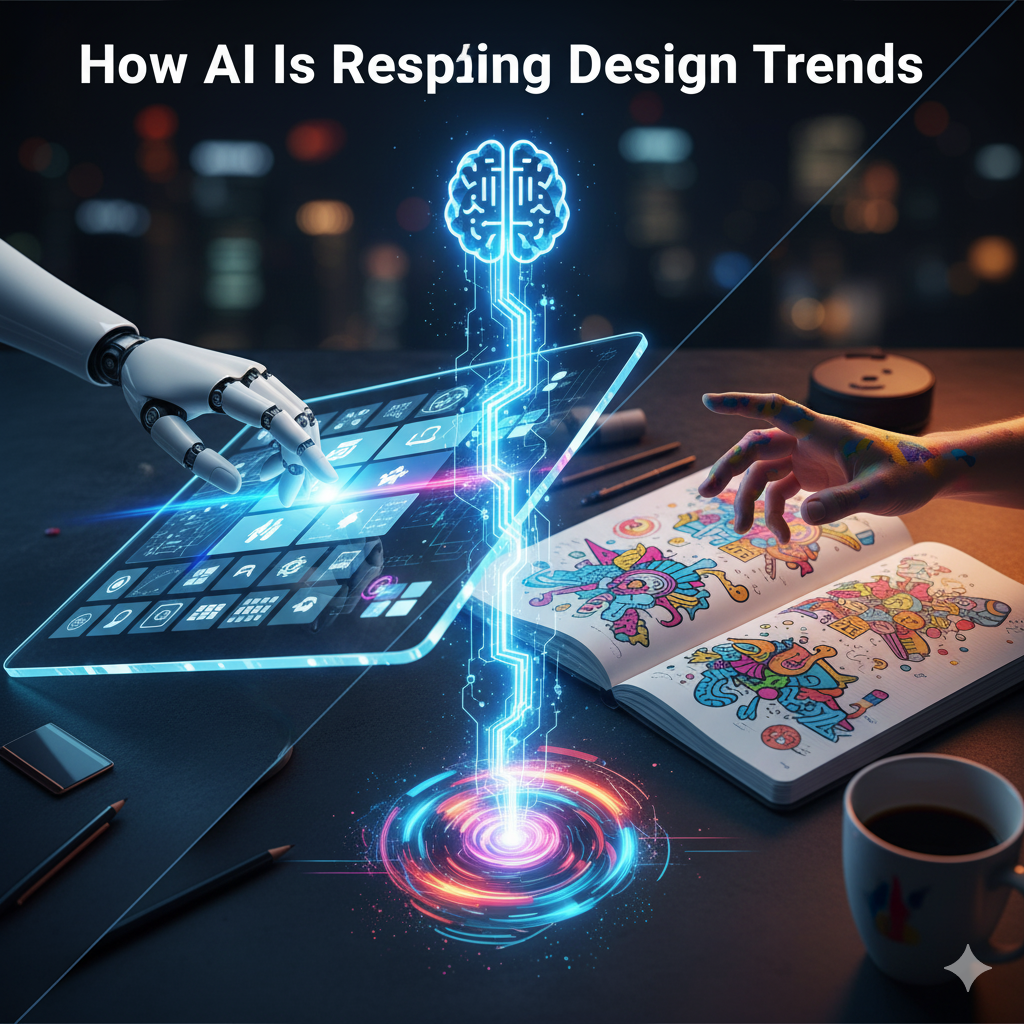
Artificial Intelligence isn’t just a buzzword — it’s quietly (and sometimes loudly) transforming how we design everything from logos to user experiences. But what does that mean for trends? And how is AI shaping the look and feel of design in 2025 and beyond?
Let’s dive into how AI is changing the design game.
🤖 1. Speed Meets Creativity
AI tools help designers generate ideas, mockups, and even full designs in record time.
- Instant mood boards from a few keywords
- Auto-generated color palettes based on emotion or brand values
- Quick layout suggestions that balance aesthetics and usability
What it means: More time for creative thinking and experimentation, less time on repetitive tasks.
🎨 2. New Aesthetic Possibilities
AI can analyze vast amounts of data and trends, helping create designs that blend styles in unexpected ways.
- Mixing retro with futuristic in seamless ways
- Generating unique typography styles tailored to brands
- Creating art and illustrations that push boundaries
What it means: Designs that feel fresh because AI uncovers patterns humans might miss.
🧠 3. Personalized Design Experiences
AI enables hyper-personalized design, adapting layouts, colors, and content to individual users.
- Websites that change look based on user behavior
- Ads and social posts customized in real-time for audiences
- Packaging that can shift depending on location or season
What it means: Design that’s smarter and more connected to its audience.
⚠️ 4. Challenges & Ethical Questions
With AI’s rise, designers face new challenges:
- How to keep originality when AI can replicate styles?
- Who owns AI-generated designs?
- Balancing automation with human creativity
What it means: Designers need to rethink their role — as curators, creators, and ethical guardians.
Wrap-Up: AI + Human Creativity = The Future
AI is reshaping design trends by speeding up workflows, opening new creative doors, and making personalization possible. But at its core, design will always need human insight, emotion, and intuition.