🎨 What’s In: The Era of Dynamic & Expressive Logos
The modern logo is defined by its ability to convey a clear message while remaining versatile and emotionally resonant.
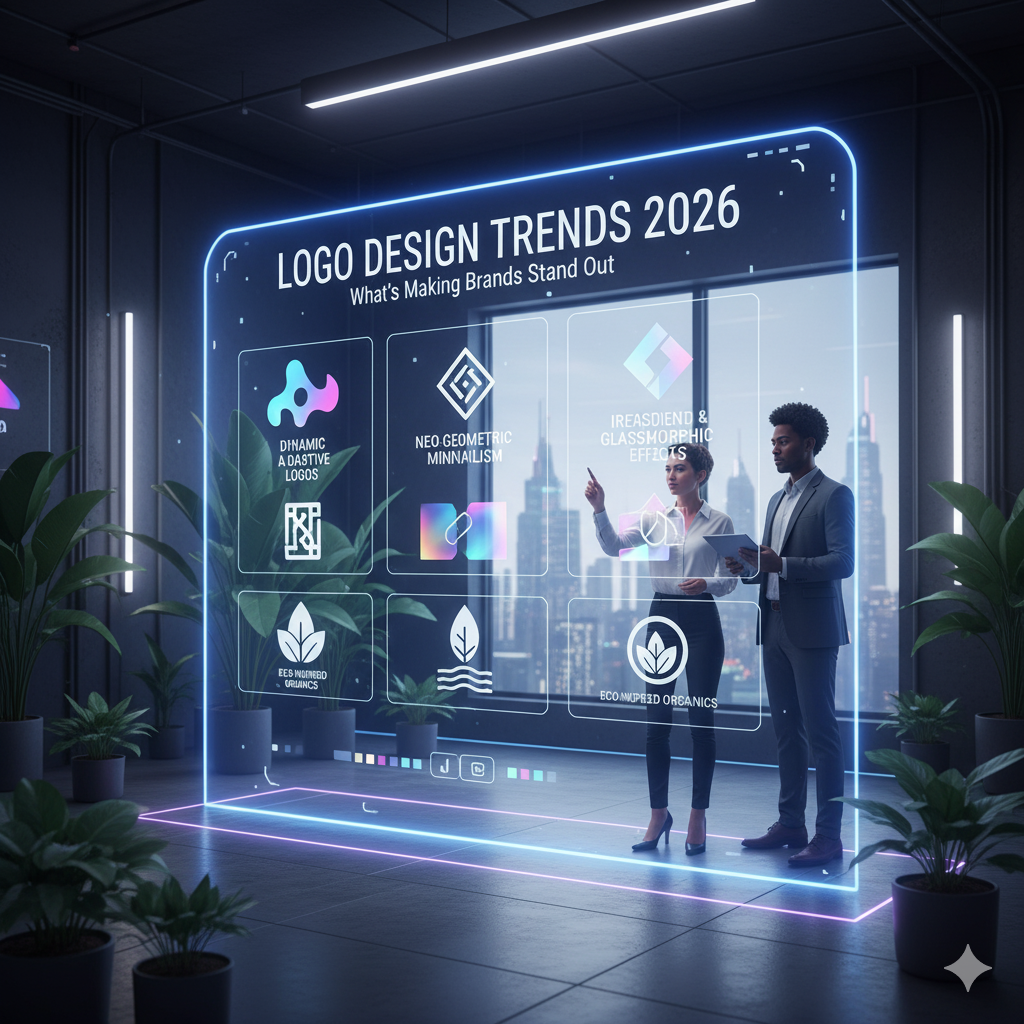
- Dynamic Branding Ecosystems: The most significant trend of 2026 is the death of the fixed logo. In its place is a dynamic branding ecosystem where the logo is a flexible, modular system. A brand’s visual identity can now shift in real-time, adapting its colors, forms, or even typography based on the platform, user interaction, or a specific marketing campaign. This approach ensures the brand always feels fresh and relevant, from a tiny app icon to a large-scale billboard.
- Neo-Brutalism & Anti-Design: In a world of hyper-polished, AI-generated imagery, a raw, authentic aesthetic is a powerful statement. Neo-Brutalist logos are characterized by their stripped-down, raw, and utilitarian feel. Think of blocky typography, exposed grids, and a deliberate “ugly on purpose” aesthetic. This trend is a rebellion against generic perfection and is particularly effective for brands in the tech, art, or fashion industries looking to disrupt and stand out from the crowd.
- Handcrafted & Human-Made Imperfection: As an extension of the anti-synthetic movement, logos that look like they were drawn by a human hand are gaining immense popularity. This includes logos with a hand-drawn feel, subtle imperfections, and a sense of texture or grain. This style evokes feelings of authenticity, warmth, and trust—a direct contrast to the cold, sterile feeling of perfect digital lines.
- Artistic & Expressive Typography: Logos that are purely typographic are making a bold comeback. Designers are no longer just choosing a font; they are manipulating letterforms into unique, artistic expressions. This can involve custom letter-spacing, unconventional ligatures, or morphing letters into abstract shapes. When done correctly, a typographic logo can be just as memorable and iconic as a symbol.
- Dimensionality & 3D: While flat design dominated for years, designers are now adding a sense of depth and dimension back into logos. This isn’t a return to the shiny, beveled buttons of the early 2000s, but a more subtle use of 3D effects, shadows, and floating elements to create a feeling of layers and physical space. These logos are designed to be integrated into augmented reality (AR) and virtual reality (VR) experiences, making them feel interactive and alive.
❌ What’s Out: The End of Over-Simplification
While the principles of simplicity and clarity remain paramount, certain trends have been so overused that they are no longer effective.
- Generic Geometric Shapes: While simple is still good, logos made from generic, uninspired geometric shapes (like simple overlapping circles or triangles) are losing their impact. They have become so ubiquitous that they fail to convey a unique brand identity and often get lost in a sea of similar-looking competitors.
- Overused Sans-Serif Wordmarks: While clean, sans-serif fonts are a timeless choice, countless brands have adopted a sterile, all-lowercase sans-serif wordmark in recent years. This style has become a visual cliché, and it no longer helps a brand stand out. Designers are now seeking more distinctive typographic solutions that have more personality.
- Fixed & Non-Adaptive Logos: In an increasingly multi-platform world, a logo that looks good on a business card but fails on a social media profile picture or a wearable device is no longer viable. Brands that don’t have a flexible, scalable logo system will be at a severe disadvantage.
🔮 What’s Next: Intelligent & Synesthetic Logos
The future of logo design is deeply intertwined with technology and multi-sensory experiences.
- AI-Generated & Evolving Logos: AI will become more than just a tool; it will be a creative partner in the logo design process. We’ll see logos that are algorithmically generated, where the form and color can change based on real-time data or even a user’s emotional state.
- Synesthetic Branding: The next frontier of branding is designing for more than just the eye. Logos will be integrated into multi-sensory experiences, where they can have a corresponding sound, haptic feedback, or even a unique scent. This creates a deeply immersive and memorable brand connection that goes beyond the visual.
- Hyperlocal & Cultural Logos: As the digital world becomes more connected, brands will use logos to celebrate specific cultures and communities. This will involve the use of traditional patterns, regional typography, and native symbolism to create an authentic and deeply resonant connection with a local audience.