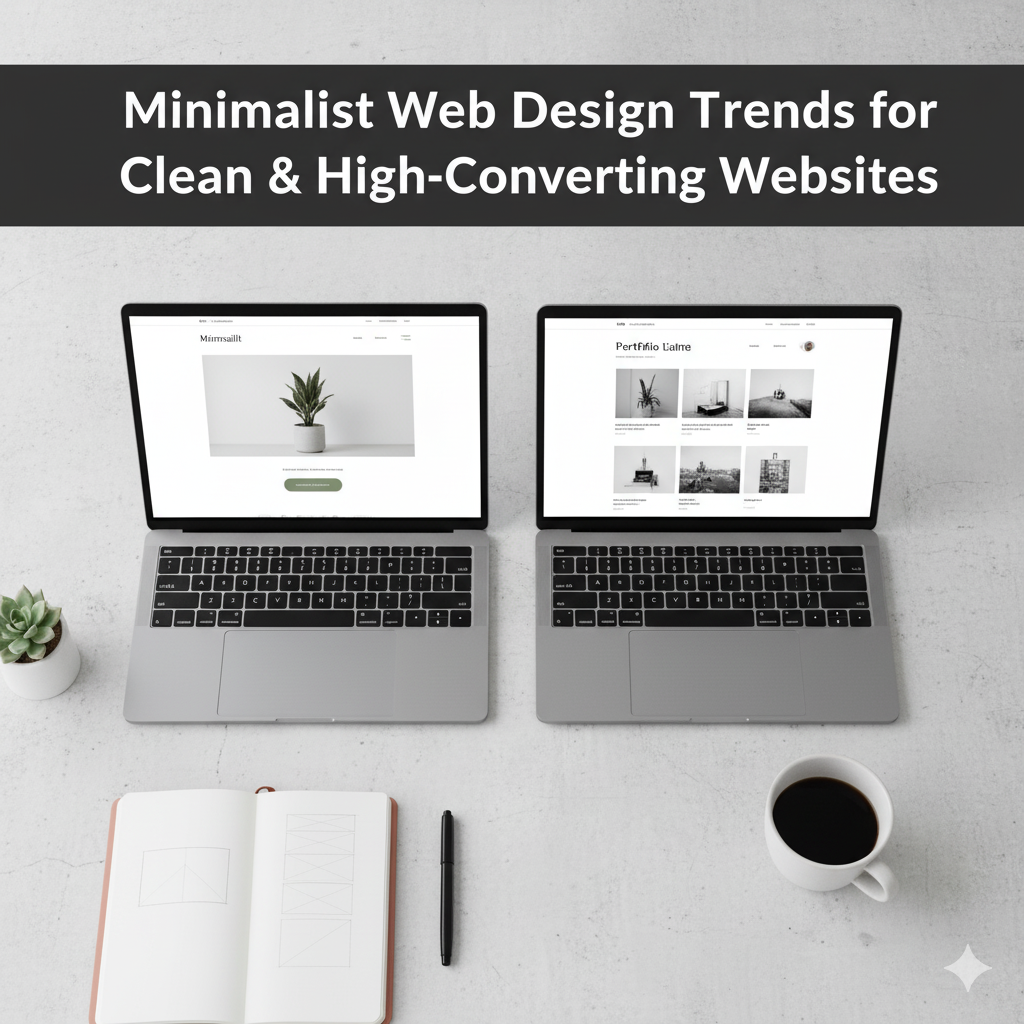
- Less really can be more—especially in web design. Minimalism isn’t just about making things pretty and simple; it’s about creating focused, user-friendly websites that guide visitors to take action.
Here are the top minimalist web design trends helping brands build clean, modern sites that convert like crazy.
⚪ 1. Whitespace as a Design Element
Whitespace (or negative space) is no longer “empty”—it’s a powerful tool.
- Gives content room to breathe and improves readability
- Creates a calm, uncluttered vibe that users love
- Helps important elements like CTAs (calls to action) stand out
Pro tip: Use generous margins and padding—don’t be afraid of empty space!
🖤 2. Monochrome & Limited Color Palettes
Keeping colors simple makes designs feel cohesive and elegant.
- Black, white, and one or two accent colors for focus
- Subtle gradients or textures for depth without distraction
- Brand colors used sparingly to highlight key areas
Pro tip: Use contrast smartly to guide the eye toward buttons and links.
🖋️ 3. Bold Typography
With fewer elements, type takes center stage.
- Big, clear fonts for headlines that grab attention
- Mix of serif and sans-serif for contrast and hierarchy
- Custom fonts or variable fonts to add personality without clutter
Pro tip: Make sure fonts are readable on all devices—especially mobile.
🖼️ 4. Simple, Impactful Imagery
Minimalist design doesn’t mean no visuals — just carefully chosen ones.
- Clean photos with plenty of whitespace or plain backgrounds
- Abstract or geometric shapes to add visual interest
- Icons and illustrations that communicate quickly and clearly
Pro tip: Optimize images for fast loading—speed boosts conversions!
⚡ 5. Fast Load Times & Smooth UX
Minimalism pairs perfectly with performance.
- Streamlined code and fewer elements mean faster pages
- Clear navigation and focused CTAs reduce bounce rates
- Micro-interactions like hover effects add polish without clutter
Pro tip: Test your site’s speed regularly and keep it lean.
Wrap-Up: Minimalism That Works
Minimalist web design isn’t just a style — it’s a strategy. By focusing on whitespace, strong typography, and smart colors, you build websites that don’t just look clean but guide visitors toward action.