Design has always been about pushing boundaries, but in 2025, those boundaries are dissolving altogether. The idea of “rules” in design—grids, minimalism, consistency—is giving way to a new era of fluidity, experimentation, and inclusivity. Today’s trends reflect a world where creativity refuses to be boxed in, blending the digital with the physical, the personal with the universal, and the chaotic with the intentional.
Here are five emerging design trends that are breaking the rules and reshaping the creative landscape.
1. Blurring Boundaries Between Physical and Digital
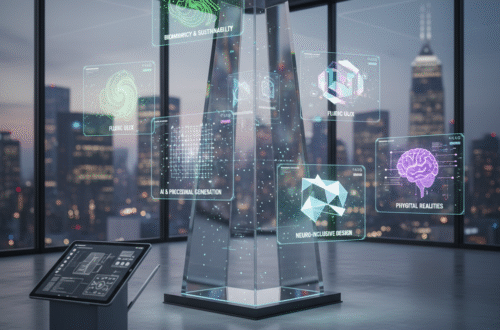
The line between the real world and the virtual one has never been thinner. With AR, VR, and mixed-reality experiences, designers are merging tactile spaces with digital interfaces. Think immersive retail environments, virtual showrooms, and hybrid events that exist both online and offline. This fluidity is transforming how audiences interact with brands, making design less about static visuals and more about dynamic, multi-sensory journeys.
What it means for designers: It’s no longer just about screens or print—it’s about experiences that live everywhere.
2. Experimental Typography
Typography is escaping the grid. Bold distortions, kinetic lettering, and type that bends, stretches, and even misbehaves are everywhere. Instead of serving as a quiet backdrop, type is becoming the star of the show, communicating mood and energy as much as words themselves. This shift is about breaking conventions and letting type feel alive.
What it means for designers: Don’t be afraid to let your fonts get weird—rules about legibility are loosening in favor of emotional impact.
3. Maximalist Color & Texture
After years of minimalist dominance, maximalism is thriving. Vibrant palettes, clashing hues, rich gradients, and layered textures are taking over screens, interiors, and packaging. It’s about more, not less—designs that feel unapologetically bold, eclectic, and expressive. In a world saturated with content, maximalism is how brands stand out.
What it means for designers: Subtlety has its place, but don’t shy away from loud, messy, and exuberant visuals.
4. AI-Driven Creativity
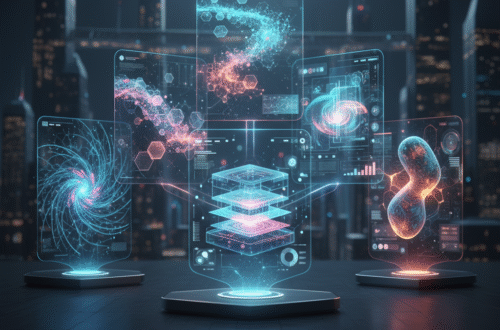
Artificial intelligence isn’t just a tool—it’s becoming a creative collaborator. From generative visuals to AI-assisted workflows, machine learning is reshaping the design process. Instead of replacing human creativity, AI is amplifying it, helping designers explore new possibilities faster than ever before. The most exciting work emerges from the tension between human intuition and algorithmic suggestion.
What it means for designers: Mastery lies in co-creation—learning how to guide AI, not be guided by it.
5. Inclusive & Adaptive Design
Fluidity also means embracing identities, abilities, and cultures that have long been overlooked. Designers are building systems that adapt to different users, whether it’s accessibility-first digital products, gender-neutral branding, or culturally diverse aesthetics. This is more than a trend—it’s the future of design ethics.
What it means for designers: Design isn’t just about beauty—it’s about belonging. Accessibility and inclusivity are no longer optional.
Final Thoughts
The future of design is fluid, flexible, and fiercely experimental. As the lines blur between mediums, rules, and audiences, designers have the freedom to explore new forms of expression. The question isn’t what’s allowed anymore—it’s what’s possible.