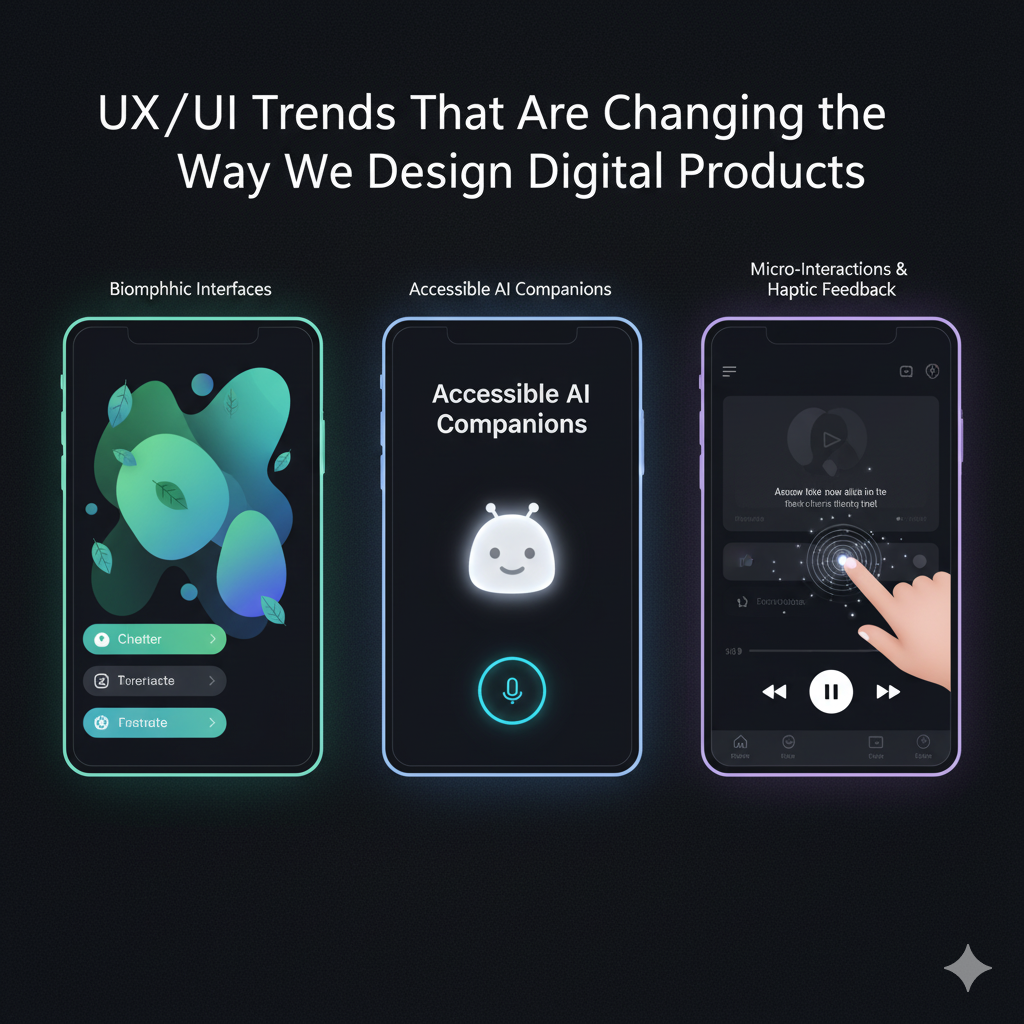
The digital world is evolving fast, and so is the way we design user experiences and interfaces. In 2025, UX/UI isn’t just about clean layouts or intuitive buttons anymore — it’s about creating meaningful, adaptive, and delightful experiences that users want to come back to.
Here are the key trends transforming digital product design — and how you can ride the wave.
1. Voice & Conversational Interfaces
Screen taps are no longer the only way users interact. Voice commands and chatbots are becoming mainstream, reshaping UI design.
- Conversational flows replacing traditional menus
- Voice search integrated with smart assistants
- Microcopy designed for spoken language
Why it matters:
Designers now think in dialogues, not just screens — making products more accessible and natural to use.
2. Micro-Interactions with Personality
Small animations and interactions are no longer afterthoughts. They’re essential for guiding users and adding brand character.
- Button hovers and clicks with feedback
- Loading animations that entertain or inform
- Subtle motion guiding attention
Why it matters:
Micro-interactions make digital products feel alive and responsive — boosting user satisfaction.
3. Adaptive & Responsive Design Beyond Screens
Designing for every device isn’t new, but 2025 pushes it further with adaptive layouts that change based on user context.
- Dynamic UI that shifts based on environment (light/dark mode, location)
- Content that reflows intuitively, not just resizes
- Personalization based on behavior and preferences
Why it matters:
Products that adapt feel smarter and more human.
4. Dark Mode and Beyond: Customizable Themes
Dark mode is standard — now users want more control over how their interface looks and feels.
- Multiple theme options beyond light/dark
- User-generated themes or brand-aligned skins
- Accessibility-focused color adjustments
Why it matters:
Customization improves comfort and inclusivity.
5. 3D Elements & Immersive Experiences
3D visuals, AR/VR integrations, and immersive layers are making UI more tactile and engaging.
- 3D buttons and icons with depth and shadows
- Augmented reality features for product previews
- Layered interfaces that invite exploration
Why it matters:
Immersive UI increases engagement and helps users connect with products on a deeper level.
6. Simplified, Content-First Interfaces
Minimalism is evolving — now the focus is on content hierarchy and clarity.
- Clear, concise copy with supporting visuals
- Purpose-driven layouts without distractions
- Prioritizing user goals over features
Why it matters:
Users want fast, meaningful interactions without noise.
7. Ethical & Inclusive Design
Designers are embracing responsibility: making products accessible, inclusive, and respectful of user privacy.
- Accessibility-first approaches (screen readers, color contrast)
- Inclusive language and diverse imagery
- Transparent data use and user control
Why it matters:
Ethical design builds trust and broadens your audience.
Wrap-Up: Designing for Humans, Not Just Screens
The future of UX/UI is flexible, human-centered, and playful. It’s about building digital products that feel less like tools and more like companions.